

Analyze complex soft tissue complications
Identify the biological, surgical, implant-related and prosthetic factors behind recession, dehiscence, papilla loss, inflammation and tissue collapse.
Diagnose, prevent and correct complex soft tissue complications around teeth and implants with a clear clinical decision tree.
Two days. Four hands-on sessions. Advanced complication management.
INTENSIVE DAYS
HANDS-ON SESSIONS
CE CREDITS
PRACTICAL
This course addresses the decisions that determine whether a complex soft tissue problem can be prevented, corrected or realistically improved: defect analysis, implant and prosthetic factors, tissue phenotype, previous surgical failure, timing and risk.
Complications such as graft failure, mucosal recession, papilla loss and peri-implant dehiscence rarely have a single cause. These two days provide a structured decision tree for understanding the problem and selecting the corrective strategy.
What you hear in the clinic
"I can recognize the complication, but I am not always sure why it happened or which corrective approach is most predictable."
What the course teaches
A repeatable process for diagnosing the cause, grading risk, choosing the intervention and managing complications step by step.
What changes Monday
Earlier recognition, clearer treatment limits and corrective procedures selected according to the true source of failure.
Six practical capabilities that connect defect analysis, decision-making, advanced grafting and surgical-prosthetic correction.
Identify the biological, surgical, implant-related and prosthetic factors behind recession, dehiscence, papilla loss, inflammation and tissue collapse.
Use a clinical risk scale to distinguish predictable corrective cases from situations with biological or restorative limitations.
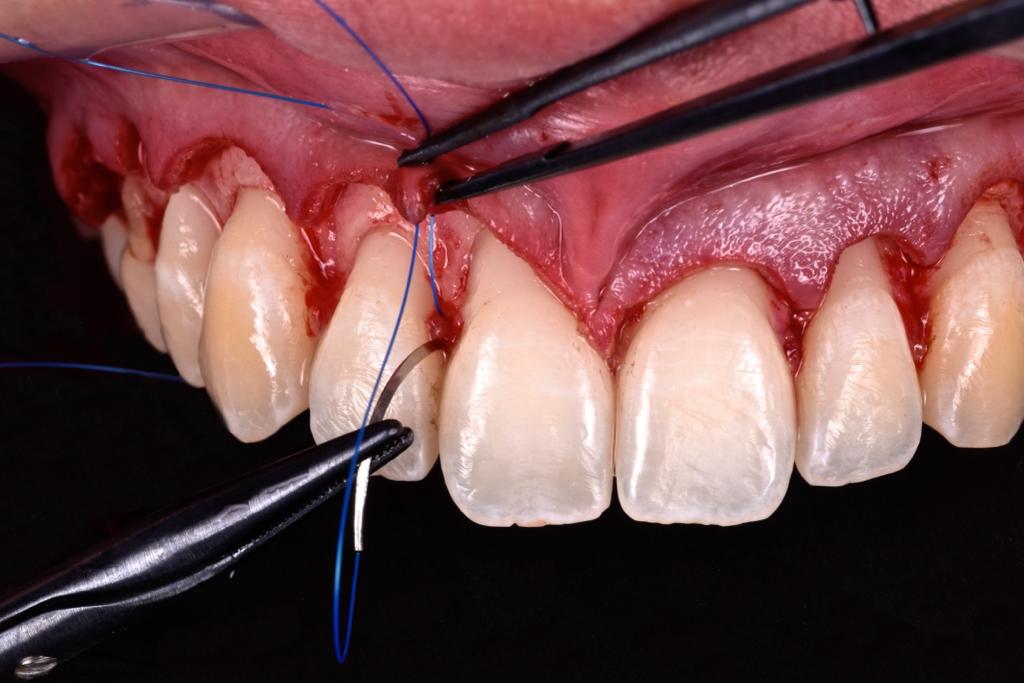
Select the appropriate timing and intervention according to the defect, tissue phenotype, implant position and previous treatment history.
Apply advanced grafting and flap-management procedures for difficult deficiencies around natural teeth and implants.
Combine surgical and prosthetic strategies to improve recession, contour deficiencies and tissue collapse in esthetic implant sites.
Integrate preventive principles, evidence-based protocols and early intervention into implant and periodontal treatment planning.
Four hands-on sessions
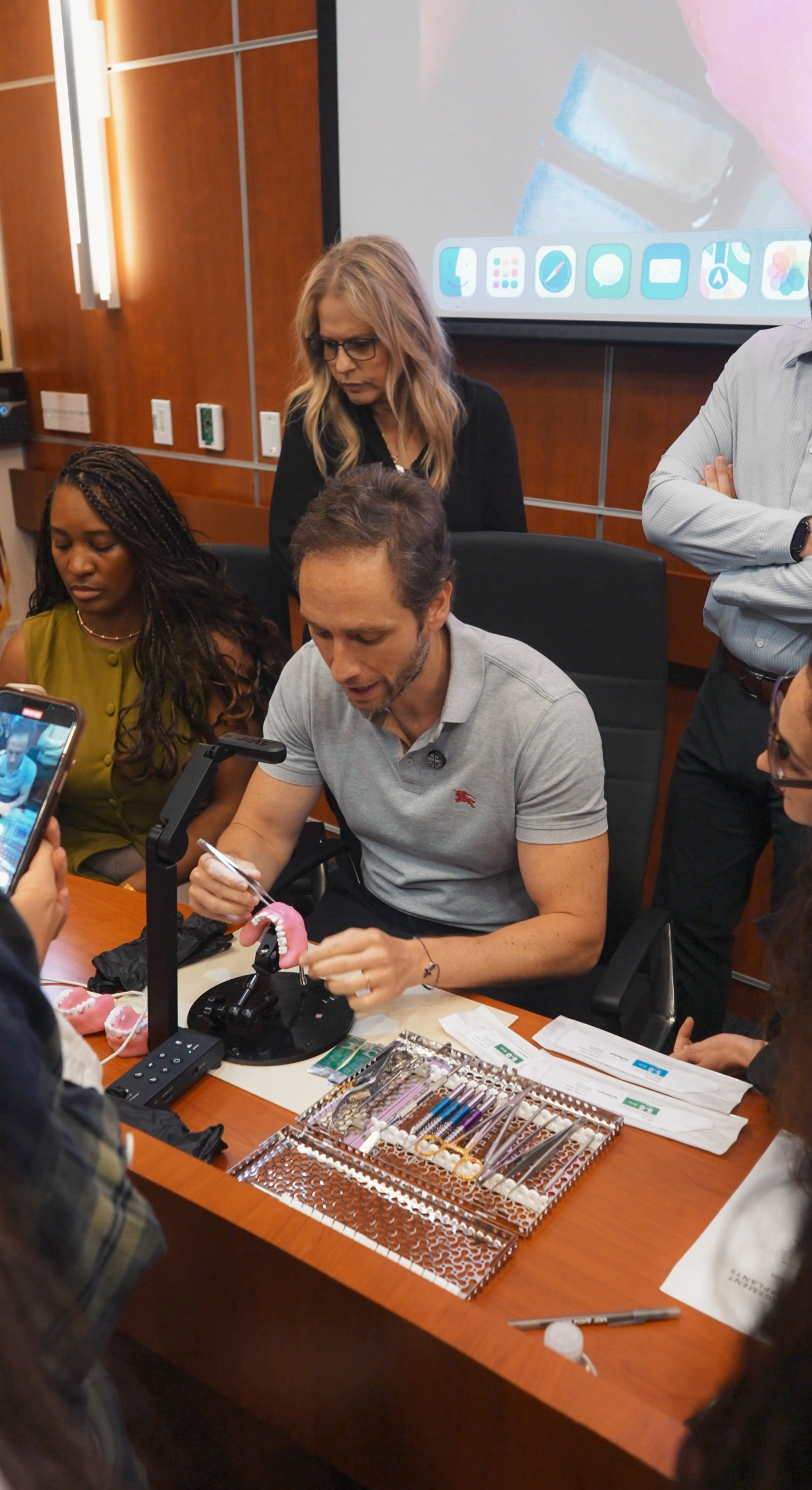
Across four supervised hands-on sessions, you will rehearse advanced grafting, dehiscence correction, papilla management and intraoperative complication protocols on realistic models.
Advanced grafting around teeth and implants
Buccal dehiscence and recession correction
Papilla and tissue-volume management
Intraoperative complication protocols
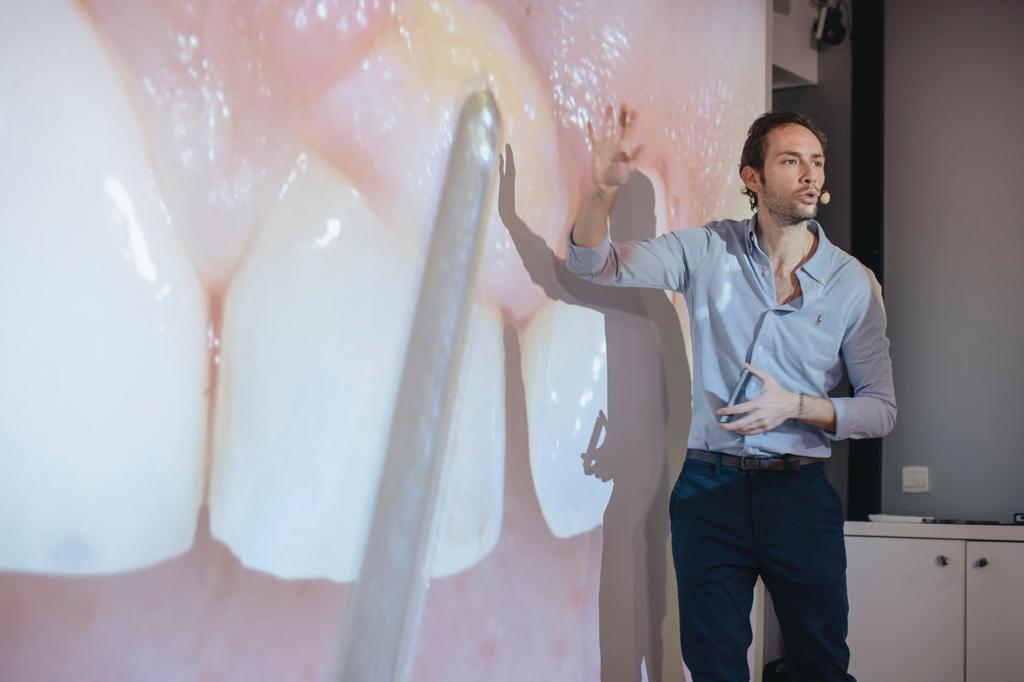
A short look at the instructor, complex clinical scenarios and practical exercises that connect diagnosis, risk assessment and corrective soft tissue surgery.
You want a structured approach to complex soft tissue complications around teeth and implants.
You need greater confidence correcting dehiscence, recession, papilla loss or failed grafting procedures.
You want advanced hands-on training guided by clinical risk assessment and decision trees.
You place, restore or manage implants and want to prevent esthetic and biological soft tissue failures.
You are looking for an introductory course limited to basic graft harvesting and suturing.
You want theoretical lectures without hands-on complication-management practice.
You do not currently diagnose or treat periodontal, implant or restorative soft tissue problems.
Five connected stages in the order you will use them — a structured workflow for preventing and managing complex soft tissue problems.
Identify the defect, previous treatment history and biological, implant-related or prosthetic factors contributing to failure.
Grade the clinical risk, determine the limits of correction and establish a realistic prognosis before intervention.
Choose the timing, grafting strategy and surgical-prosthetic approach according to the cause and complexity of the defect.
Perform the selected advanced procedure to improve tissue volume, recession, dehiscence or papillary architecture.
Protect the result through controlled healing, restorative coordination, preventive measures and structured follow-up.
Study resources, workshop tools, supervised practice and meals are included so you can focus on building a repeatable complication-management workflow.
“The course strengthened my knowledge, my confidence, and ultimately the way I care for my patients.”
Dr. Elianne Vasquez
KADI Institute
“Completing the courses gave me a whole new level of confidence to offer my patients the best treatment.”
Dr. Sandrine Riboul
KADI Institute
“Thanks to this course, I feel more confident making decisions and presenting the right treatment options to my patients.”
Dr. Ernesto Leon Caba
KADI Institute
Not generic speakers — recognized clinicians with real academic and surgical credibility, sharing the exact protocol they use.
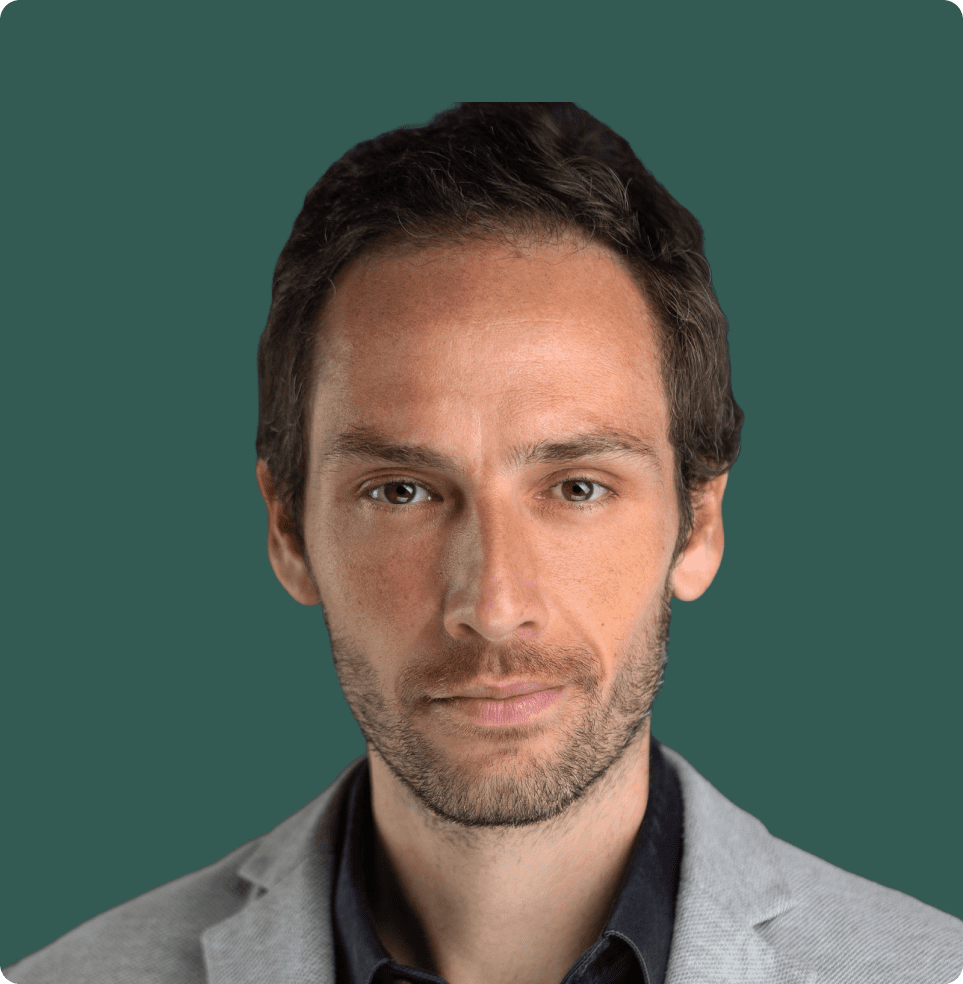
Dr. Giordani is a specialist in maxillofacial and periodontal surgery, with advanced expertise in implantology. After earning his dental degree from Universidade Paulista (UNIP) in São Paulo, Brazil, he completed a prestigious fellowship in Belgium focused on “Implants and Periodontal Plastic Surgery” under the mentorship of Dr. Eric Van Dooren—a collaboration that continues to this day.
No. Surgical familiarity is helpful, but the course guides clinicians from diagnosis and risk assessment to treatment planning and corrective execution using structured protocols.
Yes. You will study graft failure, mucosal recession, papilla loss, tissue collapse and other complications, including how to manage them step by step.
The course addresses buccal dehiscence, recession, papilla loss, flap dehiscence, persistent inflammation, graft failure and esthetic tissue deficiencies around teeth and implants.
Yes. You will perform advanced grafting and complication-management procedures on realistic models under expert supervision.
Yes. After completing the course, you can earn up to 20 CE credits recognized through AGD PACE.
Reserve your seat and build a clear workflow for risk assessment, corrective grafting, peri-implant dehiscence management and complication prevention.
Course investment
Two days. Four hands-on sessions. One structured complication-management workflow.